
Longevity in Dogs

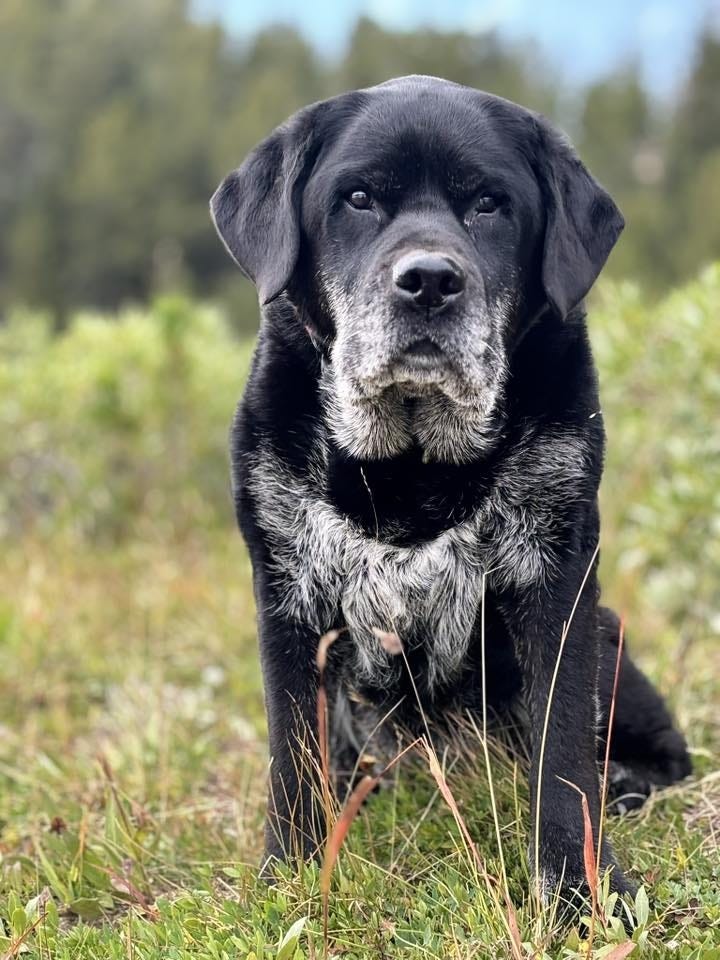
That’s Meg, in the photo. She’s my grand-dog and our Dog Wise cover girl. She’s just about fourteen years old now and as she lives in Big Sky country, she’s hiked in the backcountry, splashed in cool alpine lakes, and encountered more than her fair share of bull elk, some right in her own neighborhood. Meg’s frosted face gives it away, she’s in her senior years, but she still loves her adventures.
Longevity
I think about longevity in dogs and how (or if) it has changed over the last several decades. Improved veterinary care and nutrition has, in fact, lengthened the average lifespan of your dog by around 12 percent, from 11.5 years to 13 years.
Of course, any added time is a good thing, but in the words of Oliver Twist, “I’d like a little bit more, please.” It’s not such a crazy thing to ask for. I’m a lifelong horse person and have owned horses now for 25 years. Over the last 50 years, equine longevity rose from an average of 18-20 years to between 25-30 years and beyond.
That phenomenal rise is attributed to better nutrition, dental care, and a change in how we treat horses these days. Not so long ago, horses were put to hard labor, tilling the fields and pulling the family wagon to town on Sundays. These days it’s rare for a horse to be in full work. Most are ridden for perhaps one or two hours and turned out for the remainder of the day. The easy life has been good to horses.
Longevity by body mass
It was a long-held belief that larger mammals, like humans, outlive smaller animals like jack rabbits, based solely on body mass. Although this is somewhat true, the trend differs within species, where often just the opposite happens. Small dogs, for example, enjoy longer lives than their giant counterparts.
Scientists want to know if longevity within the animal kingdom is tied to body mass or to how much total energy is expended over a single lifetime? The challenge to finding answers is that each study takes a lifetime to complete.
Harriet, for example, is a Galapagos turtle (c.1830-2006) estimated to have been around 175 years old at the time of her death. The scientists who began studying Harriet’s secret to a long life, died before she passed.
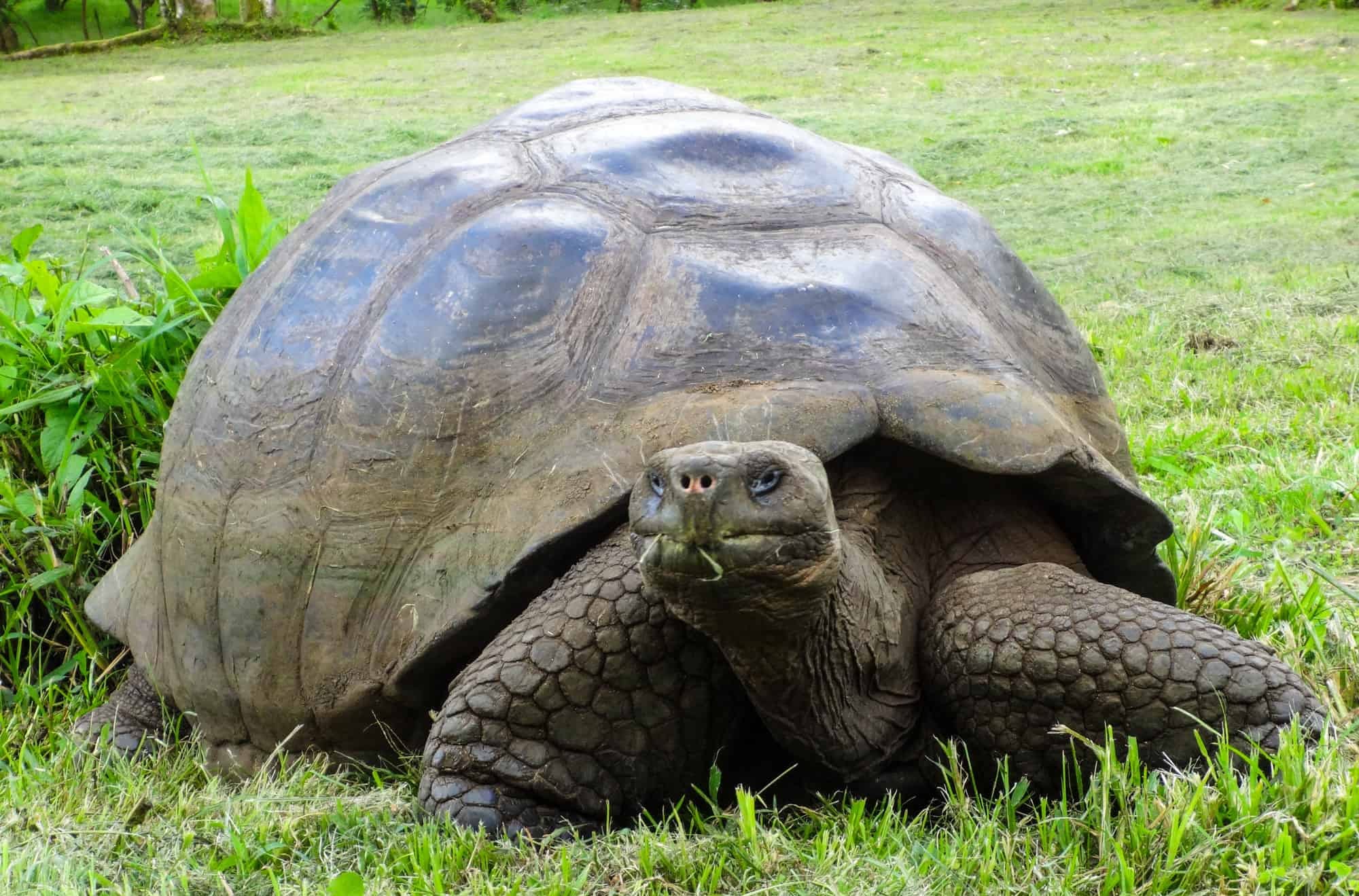
Dogs are at the forefront of studies on aging
Understandably, scientists are fascinated by the differences in aging between dog breeds. Why do small dogs tend to live longer?
There are more than 400 different dog breeds and the immense variation in body type, metabolic rates, and temperament give scientists a unique opportunity to study how this all factors into the aging process.
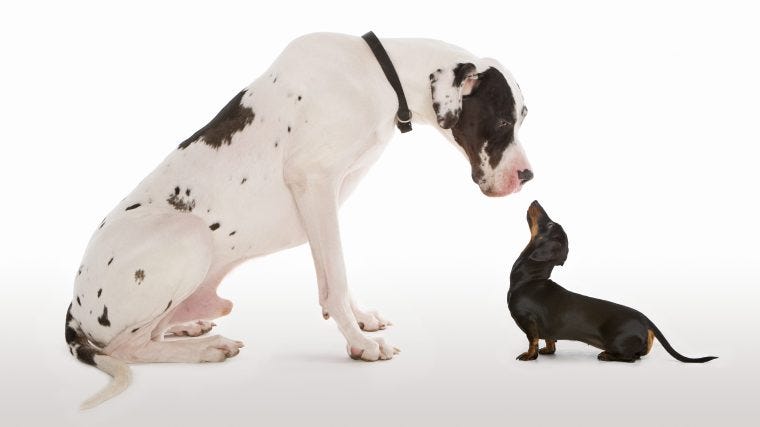
Within dog breeds, large dogs, especially the giant breeds like the Great Dane, the Mastiff, and the St. Bernard, have shorter lifespans on average than Chihuahuas and Border Terriers. This contradicts what normally happens in the animal world, although, even there, we have exceptions. Birds, for instance, are small, but live relatively long lives.
It’s unclear why small dog breeds like the miniature dachshund tend to live longer than large breeds like the Great Dane, but researchers are focusing on how large dogs grow in their early years. Rapid growth, like we see in giant breeds, leads to oxidative damage and cellular aging, or cellular senescence (the process of aging.) One study showed that senescence was already taking place in giant breeds during these early periods of rapid growth.
Large breeds also carry higher levels of IGF-1 (insulin growth factor), a stimulator of bone and muscle growth. This accounts for their meteoric rise from small puppy to large dog in a short period of time. Higher levels of IGF-1 are associated with diseases like cancer. Giant breeds are also more prone to musculoskeletal and gastrointestinal disorders that may also shorten their lifespan.
How old is my dog in human years?
When I was a kid, the formula was 1 year = 7 human years, but scientists are ahead of us here as well. Determining your dog’s physiological age in human years depends on his breed and most importantly, his size.
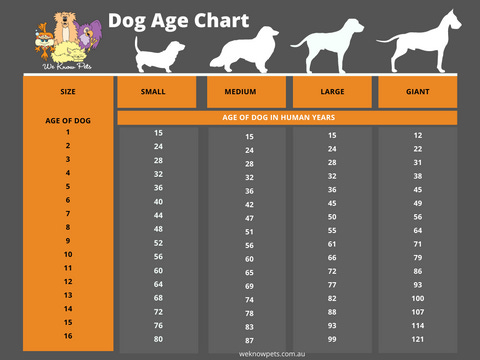
Well, I know we all want our dogs to live a long, long time. Improvements in veterinary care, dental care, and management are helping our fur babies live longer and healthier. Perhaps one day, our pups will live as long as Harriet, the Galapagos turtle. But then, we’d have to increase our own longevity so we can care for them. Hoo boy, that’s a lot to think about.
Hello sweet Sugar Face 🦋
Gotta love those hounds